 By
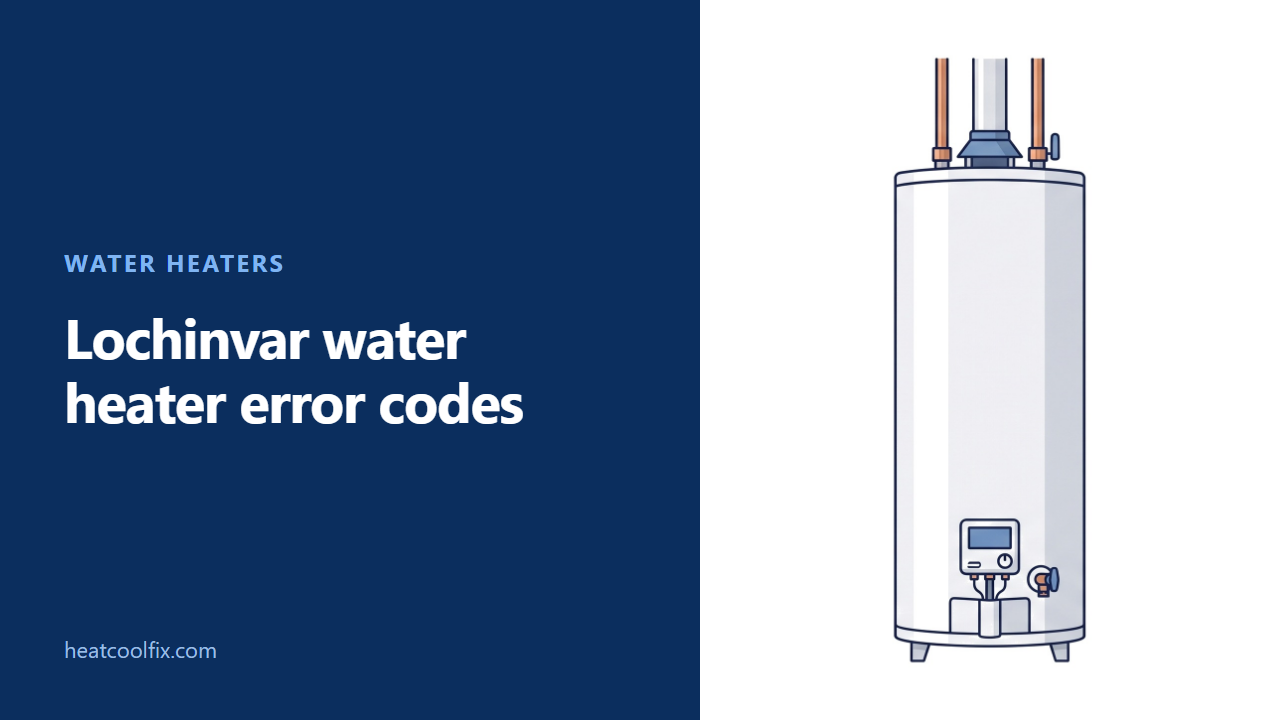
On Lochinvar PVN/PVL 07575 Series 210/211 power vent heaters, read both groups of flashes. Six then two means a pressure switch or high limit soft lockout; six then three means flame loss. Four flashes is an overheat lockout. These are water heater codes, not Knight boiler messages.
Lochinvar water heater error codes can include a pause inside the code itself. On the PVN/PVL 07575 power vent control covered here, Lochinvar says six flashes followed by two flashes means a pressure switch or high limit soft lockout.
Adding those flashes together would send you to the wrong fault. Start by matching the model and series, then watch the pauses as carefully as the light.
Before you start
What to carry: a torch, a phone for a short video and the heater’s model information. Keep the covers in place while you read the control.
Gas or electric? This page covers Lochinvar PVN/PVL 07575 Series 210/211 gas power vent water heaters with the Honeywell control in manual 100221773. It does not cover an electric tank, a Shield or every heater carrying the Lochinvar name.
Boiler or water heater? If the equipment is a Knight, use Lochinvar Knight boiler error codes. The Knight’s display messages are outside this chart.
Renting? Send the video and model details to whoever arranges your hot water repairs. That is enough to start a useful service request.
Lochinvar says that if you smell gas, do not light an appliance, touch electrical switches or use a phone inside. Leave and call the gas supplier from outside. Follow the supplier’s instructions. If the supplier cannot be reached, call the fire department.
For an overtemperature condition, Lochinvar’s page 52 says to shut off the main gas supply and have the heater repaired by a qualified service technician. Do not treat four flashes as an ordinary power reset.
Lochinvar’s corrective actions include electrical measurements, gas pressure tests and internal parts. Those are service work, not checks to perform beside the tank with its covers removed.
Read the flashes and the pauses
Capture the whole repeating pattern
Lochinvar’s page 54 uses six then two as its worked example. The gap within that code is one second; the gap before the next complete code is three seconds.
Record more than one complete repetition so the service company can see where you started counting. Keep the model, series and full pattern together in your message.
There are also two normal patterns in Lochinvar’s table: a short flash every four seconds means idle with no call for heat, while a bright and dim heartbeat means a call for heat without a fault.
By contrast, Lochinvar lists one flash followed by a three second pause as a low flame signal while the control continues operating. Do not borrow the “one blink means normal” rule from a different gas control.
The PVN/PVL 07575 code table
The meanings below follow Lochinvar’s Series 210/211 table on printed page 53. Every fault pattern here ends with the three second pause.
| Flash pattern | Lochinvar’s control status |
|---|---|
| One | Low flame signal; control continues operating |
| Two | Pressure switch failed closed |
| Three | Pressure switch failed open |
| Four | ECO temperature limit exceeded; overheat lockout |
| Five | Flame out of sequence |
| Six, then one | Soft lockout after failed ignition trials reached the retry limit |
| Six, then two | Soft lockout after pressure switch or high limit openings reached the recycle limit |
| Six, then three | Soft lockout after flame losses reached the recycle limit |
| Six, then four | Soft lockout with flame sensed out of sequence |
| Seven | Flammable vapor sensor lockout |
| Eight, then one | Flammable vapor sensor fault detected |
| Eight, then two | Temperature sensor fault detected |
| Eight, then three | Electronics fault detected |
| Eight, then four | Valve fault detected |
Pressure faults: two, three, or six then two
Describe the blower and the outside vent
Lochinvar’s checks for the pressure fault family include blower operation, pressure tubing, vent restrictions and the vent temperature limit. The table distinguishes a switch failing closed from one failing open.
Tell the technician whether the blower starts, stays running or stays silent. From ground level, report an outside vent opening that looks obstructed. Avoid climbing, dismantling the vent or reaching into the blower.
Lochinvar’s service procedure specifically says the pressure switch must not be bypassed. A jumper would remove the safety check the control is trying to make.
Ignition and vapor faults need different information
Separate failure to light from losing flame
Lochinvar labels six then one as failed trial for ignition and six then three as flame lost. Its related checks include gas pressure, supply voltage, flame sensor condition and the hot surface igniter.
Describe what the heater was doing before hot water stopped. A report that it never lit is different from one that it lit and went out. Do not attempt to light this hot surface ignition model with a match.
Report recent chemicals for a vapor alert
Lochinvar explains that its flammable vapor sensor stops gas flow when exposed to flammable vapors. Its manual lists solvents, paint, thinners and other contamination sources to investigate around the heater.
Tell the service company about recent painting, a spill or nearby chemical storage without going back into an area that smells of gas or fumes. Keep seven flashes distinct from eight then one: Lochinvar calls the first a lockout and the second a sensor fault.
Leave sensor wiring and replacement to service. The next step is identifying why the protection operated, not trying combinations of switches to erase the light.
What about the reset button?
For a diagnosed soft lockout, Lochinvar’s page 52 describes using the control’s ON/OFF switch, with ten seconds in OFF before switching back ON. It also warns that an uncorrected cause will keep the heater locked out or bring the lockout back.
That procedure does not make every code an owner reset. The manual gives conflicting ECO reset information, so leave an overheat lockout with the technician. The general water heater reset guide explains why the type of heater matters.
What each one takes
| Fault or task | What it involves |
|---|---|
| Identify the flash sequence | No parts; a video and the matching model information |
| Pressure fault | Service checks of the blower, vent, tubing and safety inputs |
| Ignition or lost flame | Gas, ignition and flame sensing diagnosis |
| Overheat or vapor protection | Safety investigation before returning the heater to operation |
| Sensor, electronics or valve fault | A service assessment before replacing a control or part |
Questions people ask
Where is the Lochinvar water heater error codes PDF?
The PVN/PVL 07575 manual has the status table on printed page 53 and flash reading instructions on page 54. Match Series 210/211 and the control before using it.
Does six then two mean eight flashes?
No. Lochinvar gives six then two its own entry. The short pause divides the two groups; the longer pause marks the end of the code.
Can a normal light mean the tank is idle?
Yes. Lochinvar’s short flash every four seconds means no call for heat and no fault condition. It does not by itself explain a complaint about water temperature at a faucet.
Is a soft lockout a broken control?
Lochinvar says a soft lockout happens when a safety device stops the heater. The control tries again after a delay, but the fault must be corrected before it can run. Lochinvar says a hard lockout means the main controller has failed and needs replacing.
What if my heater has a pilot and a temperature knob?
Use the manual matched to that model and gas valve. Do not transfer this hot surface ignition chart to a standing pilot tank; water heater blinking lights shows why the control matters.
The other hot water guides: status lights, water heater resets and Knight boiler messages.
Sources: Lochinvar Power Vented Gas Water Heaters Installation and Operating Manual, PVN/PVL 07575 and CVN075075/CVL075075 Series 210/211, 100221773_2000189439 Rev. 01 (2018), pages 1, 14, 52 to 55.